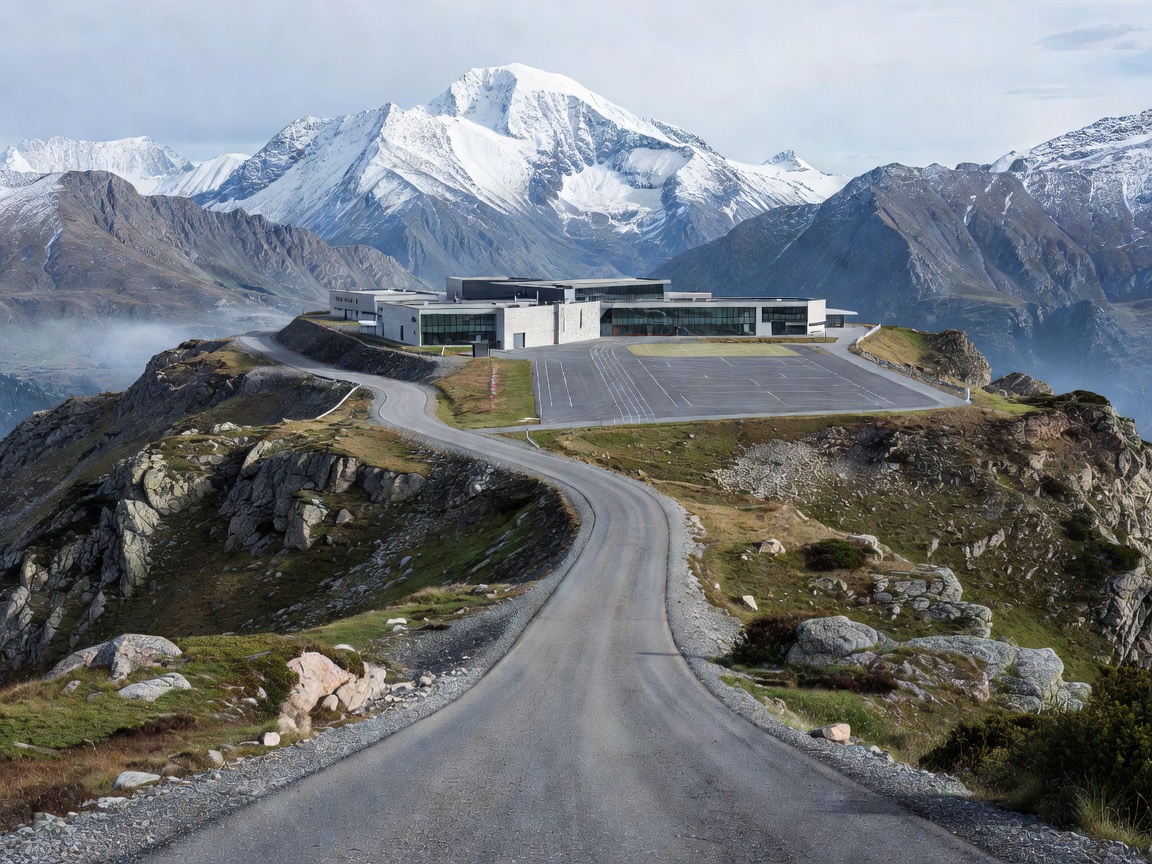
Navigating high-elevation European passes (1,800m+): strict length, gradient, and axle restrictions dictate coach and truck routing.
1. Physical Route Constraints: Switchbacks, Gradients, and Tunnels
European alpine training destinations (such as Seefeld, St. Moritz, Tignes, or Neustift im Stubaital) sit at elevations ranging from 1,200 to 2,100 meters above sea level. While these sites provide ideal cardiovascular adaptations for athletes, the access infrastructure is often engineered for light local traffic rather than heavy three-axle coaches and multi-axle freight transports.
Before confirming an alpine training destination, we execute a thorough physical route assessment. Key factors include:
- Hairpin Radius and Overhang: A 14-meter executive coach requires an inner turning radius of at least 12.5 meters. On narrow alpine switchbacks, an extended rear overhang can strike embankment barriers or scrape high center asphalt crowns.
- Sustained Incline Thermal Strain: Ascents featuring continuous 8% to 12% gradients over 15 kilometers place severe thermal stress on commercial transmissions and cooling systems, particularly during July heat waves.
- Tunnel Height and Width Clearances: Historic avalanche sheds and older single-bore tunnels in regional passes frequently feature maximum clearance heights under 3.8 meters, requiring pre-planned detour corridors.
2. Weather Volatility and Rapid Contingency Routing
Alpine weather is notoriously volatile. A warm summer day in Innsbruck can transform into sleet, torrential mudflows, or sudden rockfall along high pass access routes within two hours.
Operating an athletic camp without secondary and tertiary road access plans introduces immense organizational risk. If an alpine road closes due to sudden weather events, an entire squad can miss scheduled warm-up fixtures or domestic flights. We establish standing relationships with regional road maintenance boards (such as ASFINAG in Austria or SISEX in Switzerland) to receive real-time sensor updates on road surface friction, pass closures, and construction detours.
Operational Rule: The Transshipment Base
When a training venue sits above an access route that prohibits vehicles longer than 10 meters, we implement a "Valley Transshipment Protocol." Primary freight and squad members travel to a low-elevation transit depot (such as Innsbruck or Sion) via standard VIP coach, where cargo and personnel shift into four-wheel-drive Mercedes Sprinter shuttles for the final 25-kilometer mountain ascent.
3. Altitude Acclimatization and Logistics Coordination
Sports physiology mandates that ascending to altitude induces immediate biological effects: increased dehydration rates, altered glycogen metabolism, and sleep disruption during the first 72 hours.
Logistics must directly support sports science directives:
- Increased Liquid Freight: Athlete hydration volumes increase by 35% to 50% at elevations exceeding 1,500 meters. Logistics must schedule bulk mineral water deliveries and isotonic preparation supplies in advance of hotel arrivals.
- Oxygen and Medical Readiness: Training at altitude occasionally triggers acute mountain sickness (AMS) in support personnel or athletes. Every team transit convoy must carry certified emergency medical oxygen cylinders, properly declared under ADR European road transport regulations.
4. Resupply Cadence for Remote Alpine Resorts
Unlike metropolitan centers with 24-hour hypermarkets, alpine sports villages operate on restricted delivery windows and limited commercial inventory. High-performance sports teams consume vast amounts of fresh produce, lean proteins, and specific sports nutrition brands.
| Supply Category | Camp Inbound Source | Delivery Cadence | Logistics Considerations |
|---|---|---|---|
| Dietary Fresh Produce | Regional valley distribution hub | Every 48 hours | Refrigerated van; pre-vetted organic suppliers |
| Ice for Cryo / Baths | Local industrial ice production facility | Daily (300–500 kg) | Insulated containers; direct pitch drop-off |
| GPS & Heart Pod Spares | Central team headquarters | Advance staging | Secure locked lockers in team operations office |
| Specialist Laundry Detergents | Dedicated team freight truck | Camp inception | High-volume anti-bacterial sport wash |
5. Hotel Staging and Parking Real Estate
High-altitude resort hotels often have limited parking lots carved into steep slopes, with tight access gates and low underground garage clearances (frequently capped at 2.1 meters). Staging a 13-meter team coach and a 7.5-tonne equipment truck requires reserving exterior flat parking bays weeks prior to arrival, along with guaranteed 32A three-phase electrical hookups to keep vehicle refrigerators and charging stations running overnight without running diesel engines.