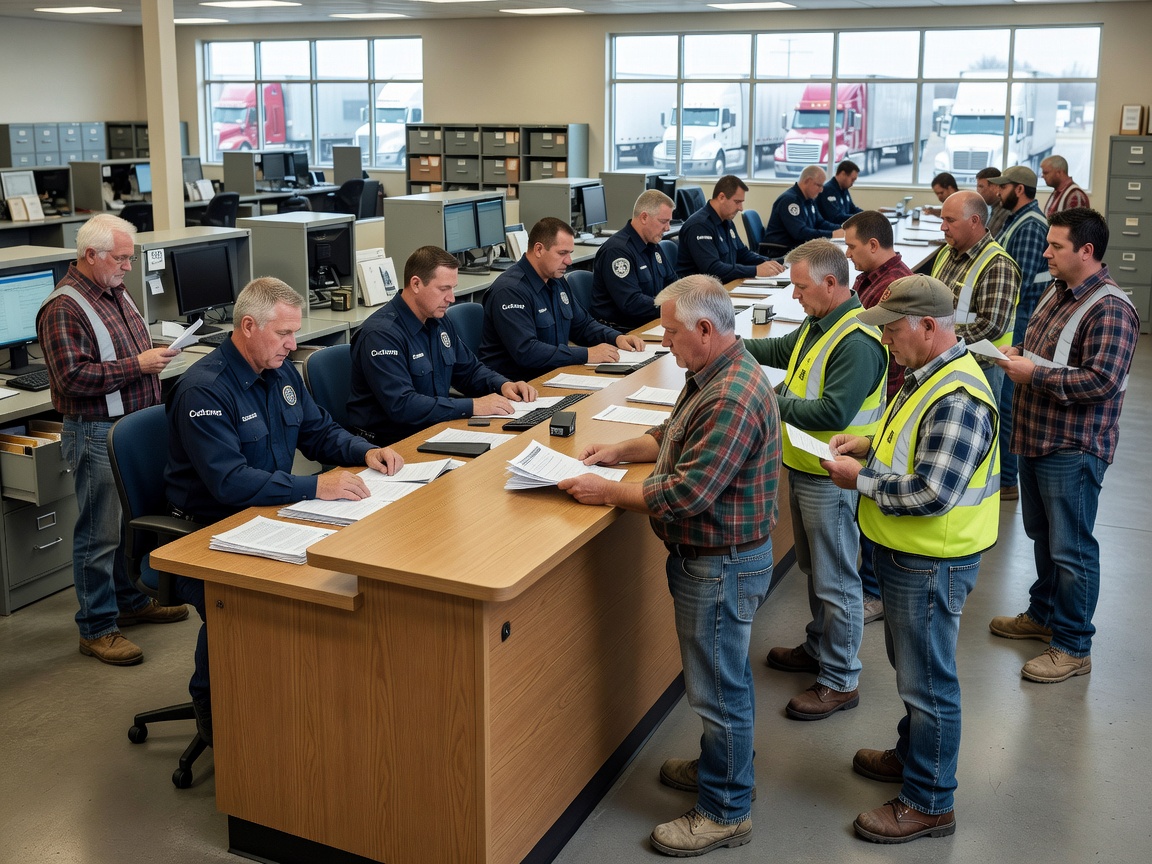
Customs border checkpoint clearance: ATA Carnet document stamping and physical seal inspection at non-EU borders.
1. Demystifying European Borders: The Schengen vs. EU Customs Union Trap
A widespread misconception in sports logistics is that because a country belongs to the Schengen border-free travel area (such as Switzerland or Norway), freight vehicles may move without customs formalities. Schengen eliminates passport checks for persons; it does not eliminate customs duty assessments or cargo inspections.
When a team enters Switzerland from France or Germany carrying four tons of sports electronics, video telemetry gear, and medical equipment, Swiss Federal Customs treats the vehicle as a commercial import. Without accurate temporary importation paperwork, vehicles face impoundment, hefty cash deposits, or prolonged inspections at border terminals (e.g., Basel/St. Louis or Chiasso), derailing training schedules.
2. The ATA Carnet: The Gold Standard for Athletic Equipment
To legally move professional gear across non-EU borders without paying import duties or value-added tax (VAT), we utilize an ATA Carnet ("Admission Temporaire/Temporary Admission").
Operating under an ATA Carnet requires strict procedural discipline:
- Serialized Itemization: Every single item inside every flight case—from a high-definition tactical camera to an agility ladder—must be recorded on the Carnet General List with exact item description, country of origin, serial number, item quantity, and commercial replacement value.
- The "Zero-Consumption" Rule: An ATA Carnet is strictly for temporary export and re-import. Consumable items (such as energy gels, protein powders, rigid zinc-oxide strapping tape, or disposable blister plasters) must never be listed on an ATA Carnet, as customs authorities expect every listed item to return intact. Consumables must instead travel under standard commercial invoices with duty settlement where applicable.
- Sequential Border Validation: Carnet vouchers must be physically stamped by customs officers on both sides of the border: outward validation by departure customs, and importation validation by entry customs. Skipping a stamp due to long queues will lead to severe penalty bonds months after the camp ends.
Medical Supplies and the Schengen Article 75 Certificate
Team doctors carrying emergency pharmaceuticals (including controlled painkillers, injectables, and asthma treatments) face severe criminal liability without formal certification. Under Article 75 of the Schengen Agreement, physicians must carry state-certified health authority permits declaring specific batch numbers and quantities corresponding exactly to the travel dates and roster size.
3. Transit Comparison: Intra-EU Movement vs. Third-Country Crossing
Understanding the operational friction between different European borders helps sports directors choose between training venue options.
| Route Profile | Documentation Required | Typical Border Dwell Time | Primary Risk Factor |
|---|---|---|---|
| Intra-EU / Schengen (e.g. Germany to Austria) | CMR Consignment Note; Standard Team Manifest | 0 – 15 minutes (Spot checks only) | Occasional mobile migration checkpoints; weigh-station stops |
| EU to Switzerland (e.g. France to Valais) | ATA Carnet; NCTS T1 Transit Form; EORI number | 45 – 120 minutes at commercial freight lane | Non-matching serial numbers on electronics; weekend freight bans |
| UK to EU Mainland (e.g. Dover to Calais) | Full ATA Carnet; French GMR/PBN entry barcode | 60 – 180 minutes at ferry/Eurotunnel terminal | Strict phytosanitary checks on animal/plant products; food bans |
4. Managing Post-Brexit Rules and Food Product Prohibitions
British teams staging camps in continental Europe, or European teams touring the UK, must navigate post-Brexit rules. Personal imports of meat- or dairy-based foodstuffs into the EU from third countries are banned under sanitary and phytosanitary (SPS) regulations.
Team nutritionists often seek to transport team-specific recovery powders, whey proteins, and specific meat snacks. Bringing uncertified dairy or meat derivatives through Calais or Dunkirk risks truck confiscation and immediate fines. We coordinate with local continental distributors to source equivalent batch-tested supplements directly inside the EU.
5. Weekend Heavy Goods Vehicle (HGV) Bans in Europe
Cross-border routing must factor in European weekend driving prohibitions. In Germany, France, Austria, and Switzerland, heavy freight vehicles above 7.5 tonnes are banned from operating on motorways from Saturday midnight through Sunday evening (22:00).
Planning a camp arrival on a Sunday using an 18-tonne equipment truck requires either obtaining exceptional sports-interest derogations from regional transport authorities or utilizing multiple sub-3.5-tonne vehicles exempt from the Sunday commercial road ban.